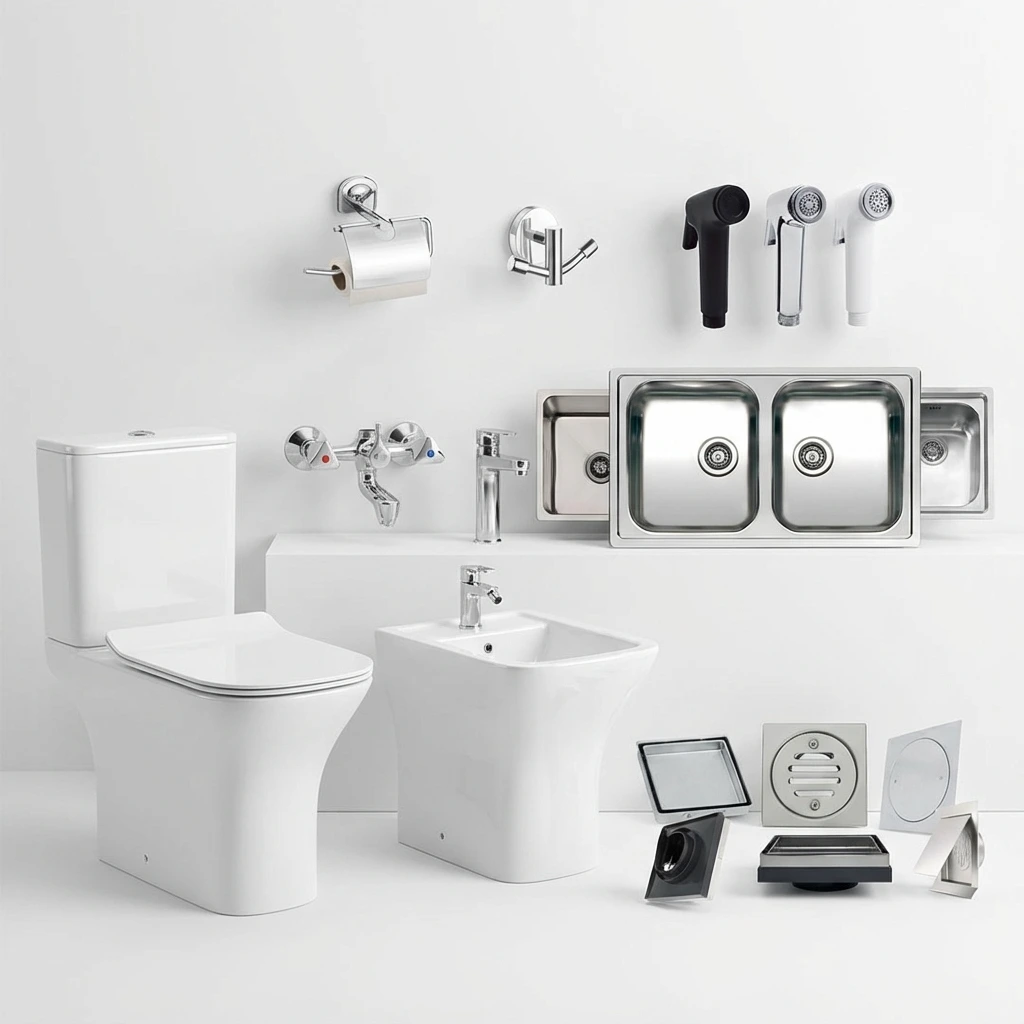
When buying faucets and plumbing fittings, it is easy to get distracted by a flawless chrome, matte black, or brushed gold finish. However, the beauty of a fitting is only skin-deep; what lies beneath the plating determines whether it will last fifteen years or fail in two.
High-quality sanitaryware utilizes solid brass as the core material. Brass is highly resistant to rust, corrosion, and calcification from hard water, making it ideal for the high-temperature and humid conditions of the Gulf. It is also physically durable and handles constant water pressure without cracking.
In contrast, cheaper fittings often use zinc alloy (zamak). While zinc is inexpensive to cast, it is far more susceptible to corrosion when exposed to moisture. Over time, zinc fittings corrode from the inside out, leading to leaks, pinholes, and chrome peeling off. Always ask for certified lead-free brass for drinking water outlets.
Sanitaryware
Brass vs. zinc fittings: why the material behind the finish matters
Published on July 24, 2026
Recent Insights

Need Professional Advice?
Contact our team of experts for plumbing, water heating, and building materials inquiries in the UAE.
Get In Touch